 The Gulf Time Newspaper One of the finest business newspapers in the UAE brought to you by our professional writers and editors.
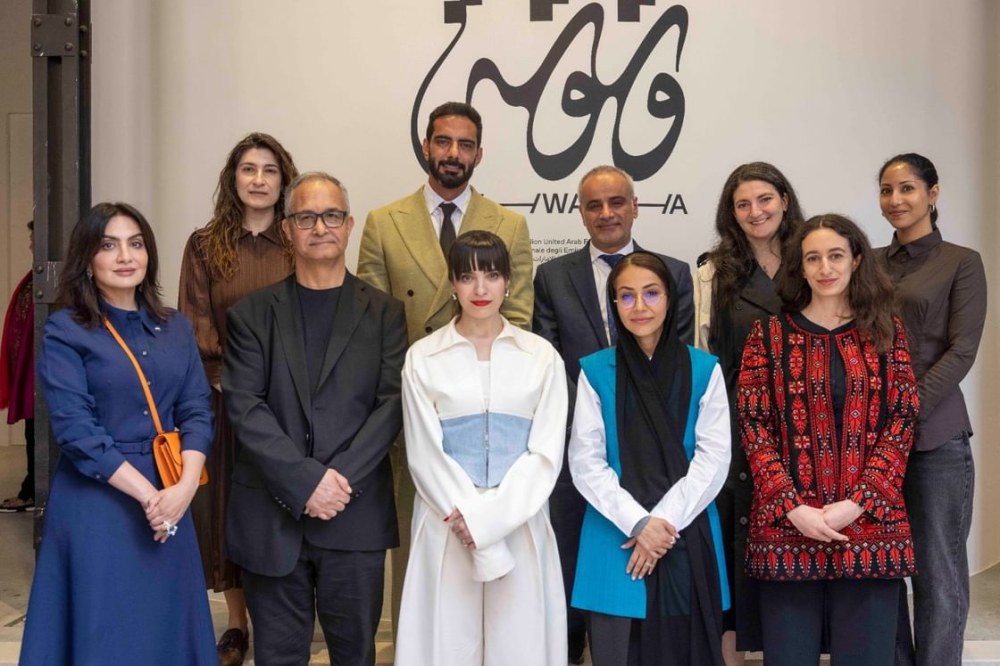
VENICE/WAM
The National Pavilion of the UAE unveiled its exhibition, Washwasha, at the Biennale Arte 2026. Curated by Bana Kattan, Curator and Associate Head of Exhibitions at the Guggenheim Abu Dhabi Project, with Assistant Curator Tala Nassar, the exhibition features newly commissioned and existing works by Mays Albaik, Jawad Al Malhi, Farah Al Qasimi, Alaa Edris, Lamya Gargash, and Taus Makhacheva.
Washwasha is a single onomatopoeic word meaning “whispering” in Arabic. Its meaning resides in the sound itself: quiet, suggestive, and open. The six artists in Washwasha use sound as a starting point to explore the intangible.
The exhibition brings together intergenerational and interdisciplinary practices to expand on themes of migration, technology, oral histories, and the relationship between language, body, and identity. Developed by the curatorial team and designed by Büro Koray Duman (B–KD) Architects, the exhibition space guides visitors from zones of quiet, close listening to areas consumed by noise and sonic overlap.
The order of the works in the floor plan serves the exhibition narrative, moving from oral histories and storytelling to language and communication, and finally to technology and hyperconnectivity.
In Naiman (2008/2026), Jawad Al Malhi presents recordings of men recalling the celebratory rituals performed on the eve of their weddings. In Kūnī Kai Akūna Kamā Aqūl! (Be, so that I may be as I say!) (2026), Mays Albaik presents two sets of glass sculptures casting the inside of her mouth at the very moment she attempts to speak, inviting us to consider what is lost in the attempted preservation of oral histories.
In her photographic series Majlis (2009), artist Lamya Gargash positions the majlis as a sonic gathering space that facilitates the social practice of hosting, listening, celebrating, grieving, and solving problems. In Farah Al Qasimi’s multi-media installation The Curse (2026), the artist explores children’s cursory understanding of guilt, as well as historical and contemporary ways people navigate communication barriers.
In a multi-media installation titled Wiswās (2026), Alaa Edris approaches washwasha through the lens of her Emirati colloquial dialect, in which the term signifies interference or confusion. Through this work, Edris reflects on the mechanization and noise of contemporary life.
Sheikh Salem bin Khalid Al Qassimi, UAE Minister of Culture, commented: “Washwasha positions the UAE as an active contributor to the global cultural ecosystem, using sound as a medium for dialogue, experimentation, and exchange.
By convening artists who reflect the region’s evolving sonic identity, the pavilion presents intangible heritage as a living practice, continuously reinterpreted within contemporary global contexts. This approach reflects the UAE’s broader cultural strategy, which focuses on investing in creative production, amplifying regional voices, and building sustainable pathways for cultural export.
Through initiatives like Washwasha, the UAE advances culture as a marker of identity and a driver of innovation, international collaboration, and long-term development.”
Angela Migally, Executive Director, Salama bint Hamdan Al Nahyan Foundation, said: “Through the years, the National Pavilion UAE has been an important platform for reflecting the depth of the artistic landscape in the UAE. It has also shown us how artistic practice is an integral part of how societies evolve with imagination, confidence, and depth.
This year’s exhibition turns to sound, memory, and everyday life as ways of thinking about identity, connection, and collective experience. We remain committed to supporting works that expand our cultural imagination, contribute to meaningful global conversations, and remain grounded in the UAE’s evolving cultural landscape.”
Bana Kattan, Curator, said: “This exhibition brings together a group of artists whose practices engage deeply with sound, language, and memory. Each artist brings a distinct perspective, and together they form a dialogue that reflects the depth of artistic practices connected to the UAE. The selection also reflects the demographic and cultural plurality of the UAE, bringing together artists with lived connections to the country.”
Laila Binbrek, Director, National Pavilion UAE – La Biennale di Venezia, said: “What audiences encounter in Venice is the culmination of more than a year and a half of dedicated work; it is the harvest of a deeply rooted, homegrown cultural ecosystem.
This year’s pavilion represents a ‘full circle’ moment for our community. Among our exhibiting artists are former Venice interns who began their early careers navigating the Biennale with us, now returning to the global stage as established practitioners.
We also proudly welcome back an artist who represented the UAE in our very first pavilion in 2009. This exhibition is a testament to our unwavering commitment to developing the UAE arts scene at home, proving that when we invest in our youth and our creatives, we reap the rewards.”
Through its Venice Internship Programme – now in its fifteenth year and with over 300 interns to date, the National Pavilion UAE reaffirms its commitment to developing the UAE arts scene, highlighting the impact of sustained investment in emerging creatives and young talent.
Reflecting this growth, four alumnae of the programme are involved in this year’s presentation: Alaa Edris (2009) and Mays Albaik (2016) are participating artists in the exhibition, while Moza Almatrooshi (2013) and Roudhah AlMazrouei (2024) feature in the ‘Voice of the Country’ Programme Activation, which runs alongside the exhibition.
The Biennale Arte 2026 will mark the UAE’s fifteenth participation at the International Art and Architecture Exhibitions of La Biennale di Venezia and its ninth participation in the International Art Exhibition.
The National Pavilion UAE is commissioned by the Salama bint Hamdan Al Nahyan Foundation and supported by the UAE Ministry of Culture, with a permanent pavilion at the Arsenale – Sale d’Armi.