 The Gulf Time Newspaper One of the finest business newspapers in the UAE brought to you by our professional writers and editors.
GULF TIME
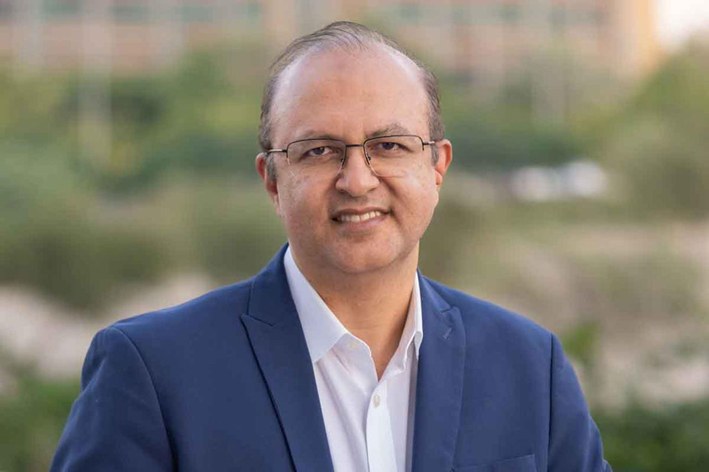
Mansoor Meenai, Head of the META Region at Arcera Life Sciences, highlights that healthcare systems across the Middle East, Türkiye and Africa are at a turning point in their AI journey, as the focus shifts from experimentation to real, measurable impact. While artificial intelligence has long been viewed as a promising innovation, he notes that the priority today is embedding responsible, evidence-led solutions that can improve patient outcomes, enhance operational efficiency, and strengthen long-term healthcare resilience.
Speaking on the sidelines of Arcera’s ‘Catalyst: Collaborating to Turn AI Vision to Value’ forum at NYU Abu Dhabi, Meenai underscored the critical role of collaboration between government, academia, and industry to ensure AI adoption is aligned with real system needs, supported by strong governance, and capable of delivering value at scale.
- What is Arcera aiming to achieve through the Catalyst forum at NYU Abu Dhabi?
The ‘Catalyst: Collaborating to Turn AI Vision to Value’ Forum is is about one thing — moving AI in healthcare from ideas to real impact.
There’s no shortage of pilots and concepts today, but many systems are still struggling to turn that into something that actually makes a difference. We wanted to bring the right people together — from government, academia, and industry — to have an honest conversation about what’s working, what’s not, and how AI can be applied responsibly and deliver measurable impact.
Hosting it at NYU Abu Dhabi during UAE Innovates Month helped ground the conversation in evidence, governance, and collaboration. We focused on real use cases — improving patient outcomes, making systems more efficient, strengthening supply chains, and supporting healthcare professionals in their day-to-day work.
We also spoke about the basics that often get overlooked — trust, accountability, and building capabilities over time.
Ultimately, this forum reflects our commitment to strengthening healthcare resilience across the UAE and the wider Middle East — making sure innovation actually delivers value, not just ideas.
- Why is now the right moment to move from AI vision to measurable value in healthcare?
Healthcare systems across the META region are under real pressure — workforce shortages, rising demand, higher costs, and increasing complexity. At this point, incremental change just isn’t enough.
At the same time, AI has matured. We’re no longer talking about experiments — we’re seeing solutions that can scale and deliver measurable value.
What makes this moment different is that we’re seeing increasing readiness across the ecosystem. Data is more available, digital infrastructure is stronger, and leaders are increasingly focused on outcomes, not just pilots. In markets like the UAE, national strategies and evolving regulation are also helping create a clearer path for responsible adoption.
There’s also been a clear shift in mindset. People are no longer impressed by technology alone — they expect it to deliver real clinical, operational, or economic impact. That’s what’s driving the move from isolated projects to solutions that are embedded across the system.
At Arcera Life Sciences, we see it simply: the question is no longer whether AI can transform healthcare, but how quickly we can implement it in a way that is trusted, evidence-led, and aligned with real patient and system needs.
- Where is AI already delivering tangible impact across healthcare systems today?
We’re already seeing real impact in areas where healthcare systems deal with complexity at scale.
Diagnostics is one of the clearest examples. AI-supported imaging and data analysis are helping clinicians detect conditions earlier and more accurately. In the UAE, Emirates Health Services (EHS) has already deployed AI across areas like breast cancer detection, lung tuberculosis, brain stroke, osteoporosis, bone fractures, and chest diseases.
We’re also seeing strong impact on the operational side. AI is helping hospitals manage workflows, predict demand, strengthen supply chains, and reduce waste. Even small improvements here can make a big difference. In the UAE, the Ministry of Health and Prevention (MOHAP) has been using AI technologies since 2019 to reduce waiting time in emergency departments .
In life sciences, AI is accelerating research, improving manufacturing efficiency, and strengthening quality control. It’s also helping healthcare professionals by providing more relevant, data-driven insights to support their clinical decisions .
Importantly, AI is not replacing human expertise — it’s supporting it. The real value comes when technology and clinical judgment work together.
- What are the biggest barriers preventing AI adoption at scale in healthcare?
The biggest barriers are not really about technology — they’re more about how healthcare systems are set up and how healthcare stakeholders work within them. One of the biggest challenges is data. It’s still fragmented and sitting in silos across different systems, which makes it hard to use in a meaningful way.
Trust is another key factor. Healthcare stakeholders need to feel confident that AI is being used responsibly — that it’s transparent, secure, and properly governed. Without that, adoption slows down very quickly.
Then there’s capability. AI isn’t just about technology — it requires clinical understanding, the right skills, and the ability to embed it into day-to-day practice. Many organisations are still building that. We’ve seen recent research showing that while AI integration is growing, only 13.8% of clinicians felt their training had adequately prepared them for AI integration . In the UAE, healthcare institutions like Dubai Health are starting to address this through AI literacy initiatives, which is an important step.
And finally, incentives matter. If AI doesn’t clearly improve outcomes or efficiency, it simply won’t scale — no matter how advanced the technology is.
At the end of the day, overcoming these barriers comes down to collaboration — across government, academia, and industry — and making sure AI is driven by real healthcare needs, not just the technology itself.
- How can healthcare leaders balance innovation with trust and governance?
Balancing innovation with trust starts by treating governance as an enabler, not a constraint.
As leaders, we need to embed ethical frameworks and data protection into AI projects from day one, not treat them as an afterthought. We also need to be transparent about how data is used and how decisions are made. When clinicians and patients see that transparency, that’s when real confidence is built.
We also have to prioritize evidence. Innovation needs to demonstrate measurable value — whether that’s better clinical outcomes, greater efficiency, or an improved patient experience. When the results are clear, trust follows.
Finally, collaboration is key. Engaging regulators, academia, and industry early helps align innovation with policy and societal expectations. At Arcera Life sciences, we see this as a shared responsibility. Our recent partnership with the ISPOR UAE Chapter is one example— working together on health economics and outcomes research to strengthen the evidence base and inform policy frameworks that support better decision-making.
This is what enables innovations — including new treatments for multidrug-resistant infections, such as our novel intravenous antibiotics — to be integrated into healthcare systems safely, responsibly, and at scale.
At Arcera Life sciences, we believe responsible innovation requires both ambition and discipline. By combining technological capability with strong governance and partnership, healthcare leaders can unlock AI’s potential while preserving the trust that healthcare systems depend on.