 The Gulf Time Newspaper One of the finest business newspapers in the UAE brought to you by our professional writers and editors.
ABU DHABI / WAM
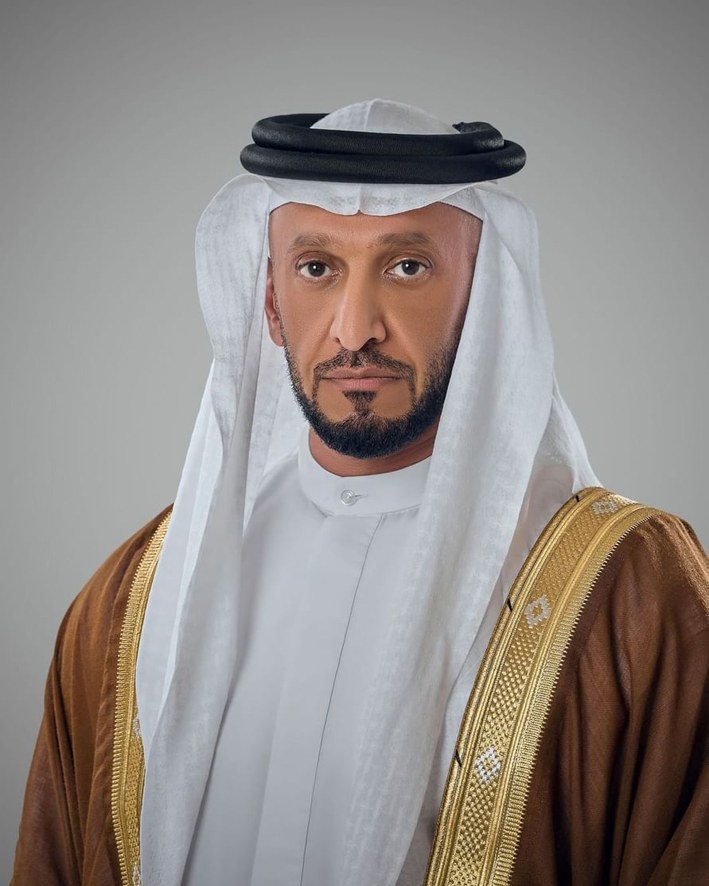
Abdulla bin Mohammed bin Butti Al Hamed, Chairman of the National Media Authority (NMA), said the declaration of 2026 as the “Year of the Family” by President His Highness Sheikh Mohamed bin Zayed Al Nahyan embodies a far-sighted vision that recognises that society’s strength and the sustainability of its achievements begin with the family, the first nurturer of values and the first school of belonging, responsibility and discipline.
“This highlights the importance of integration between the home and national institutions: the family instils values, the university refines them, and practical service puts them to the test,” Al Hamed said in an interview with the Zayed Military University newspaper.
He described Zayed Military University as a model of this integration through its academic and military training and its role in developing well-rounded individuals capable of translating values and knowledge into action.
He said that media serves as a link that embeds these values in the public consciousness. An institution with its own media platform can tell its story from within, communicate directives and initiatives professionally, explain their meaning and impact, raise awareness, and build trust that outlasts the news itself.
“When families, education, institutions and media come together around a shared set of values, human development becomes an integrated national endeavour,” he added.
Al Hamed said the establishment of the National Media Authority represents a strategic step that reflects an understanding of the importance of media in strengthening the UAE’s presence and standing, unifying media efforts and enhancing their reach and influence.
“We see the Authority as part of a national framework whose aim is to ensure that the UAE has a voice commensurate with its presence, standing and influence,” he noted.
The NMA Chairman said the Authority’s work draws inspiration from the vision for media of President His Highness Sheikh Mohamed bin Zayed Al Nahyan, which has defined the roadmap and philosophy of Emirati media as a noble mission that shapes awareness, builds trust, preserves identity and builds the future.
He emphasised that media is fundamentally concerned with people’s minds and perspectives, beyond being a profession or a job.
He added that the Authority’s framework also draws on the directives of His Highness Sheikh Mohammed bin Rashid Al Maktoum, Vice President, Prime Minister and Ruler of Dubai, which promote innovation, competitiveness and openness to the world. These directives emphasise the importance of harnessing modern tools and developing media into an advanced sector capable of creating content, using technology and reaching audiences effectively.
The oversight of His Highness Sheikh Mansour bin Zayed Al Nahyan, Vice President, Prime Minister and Chairman of the Presidential Court, also plays a significant role in embedding an integrated institutional approach, unifying efforts across the media sector and advancing the development of talent, tools and partnerships. This strengthens Emirati media’s presence and enhances its ability to keep pace with change and create a lasting impact.
“On this basis, a unified message does not mean standardising approaches or eliminating diversity. Rather, it means ensuring that different messages complement one another around clear foundations, and moving from separate initiatives towards a more coordinated media framework with greater reach and influence,” he said.
Al Hamed added, “We are counting on four key elements: Emirati talent that creates content, technologies that amplify reach, international partnerships that open new horizons, and precise measurement of impact to keep our efforts on course. We are also investing in multilingual content, artificial intelligence and modern technologies, while ensuring that people remain the originators of ideas and responsible for their content.”
He stressed that a narrative capable of reaching international audiences must begin with firmly established credibility at home, adding that the UAE seeks not only to share its story with the world but also to tell it from an Emirati perspective and help shape global discussions on issues affecting the region and its future.
Media today is an integrated industry, and no institution can build an influential presence in isolation from its wider environment, he said. Successful partnerships do not replace identity but enrich it with new capabilities, expertise and knowledge.
The UAE has an advanced environment for media and production, he said, adding that the ambition is to transform it from infrastructure that hosts production into an ecosystem that generates ideas and content, develops talent and connects Emirati and Arab professionals with leading international expertise.
Al Hamed said collaboration should go beyond exchanging services to sharing knowledge and building capabilities, with each successful partnership contributing a new skill, technology or access to a new audience.
He noted that major media hubs emerge through confident openness to the world, drawing on the best it has to offer while sharing their own experiences, ideas and talent in return.
“We seek to realise our wise leadership’s vision of the UAE as a place where media investment meets talent, technology and ideas, and where content creation becomes part of its creative economy and its capacity to export ideas to the world,” he said.
The NMA Chairman emphasised that “identity is a compass, not a constraint, and technology is a medium, not an end in itself.”
He said true modernity means carrying national values into tomorrow using tools that the future understands. Media that fears digital transformation falls behind, while media that loses itself in it forfeits its distinctive character.
He stressed the importance of embracing modern technologies while preserving national values, allowing forms of communication to evolve without changing their essence.
Al Hamed added that technology provides speed, reach and new tools but cannot give content meaning, which comes from people’s understanding of their society and the changes around them.
“Our responsibility is therefore to speak to each generation in its own language and present our national identity in contemporary formats that reach younger generations—as a foundation from which we move towards the future, rather than as something belonging to the past. Technology carries the message far and wide, but values determine what it carries,” he said.
On the key features of the Authority’s strategy for building an innovative media system that can compete regionally and globally, Al Hamed said that many believe a successful media strategy begins with the question: “How do we reach the greatest number of people?”
“From our perspective, however, it begins with a deeper question: “What do we want to linger in people’s minds after the UAE’s media content reaches them?”” he explained.
He explained that the Authority is working to establish an integrated system built on three interconnected pillars: authentic content that reflects the UAE’s values and distinctive signature, Emirati talent capable of producing and developing it, and smart platforms and technologies that deliver it to the right audience at the right time.
“We continue to invest in innovation, artificial intelligence and data analysis to develop the industry and understand audiences, not to replace people. However advanced technology becomes, it remains a tool, while ideas, professionalism and human sensitivity remain the foundation of influence,” he stated.
He stressed that global competition also requires the UAE to move beyond producing content solely for domestic consumption towards content that can reach international audiences while retaining its distinctive Emirati and Arab character.
“Our aim is for the UAE to have a presence in the global media landscape not only as a country that hosts media organisations, but also as one that produces knowledge, content and narratives,” he said.
The NMA Chairman also congratulated Zayed Military University on launching its first newspaper, saying the initiative reflects a sophisticated understanding of the importance of media in documenting institutions’ experiences and conveying their mission to society.
He said the launch signifies more than the publication of a newspaper, marking the institution’s transition from a recipient of content to a partner in producing and documenting content and sharing its experience with society.
He added, “No doubt, this is a shift in vision before it is a shift in tools. When the university publishes its own newspaper, it decides for itself what story it wants to tell, how to tell it and whom to tell it to. An institution that tells its own story is more capable of revealing details that may not emerge in conventional coverage: the people, the experiences, the transformations, the challenges and the achievements.”
“This is particularly important for educational and military institutions, whose work extends beyond individual events to developing generations and preparing qualified personnel for the future,” he added.
Al Hamed stated that this initiative also paves the way for a new generation of specialised institutional media that seeks to document knowledge and expertise and present them professionally to local and international audiences.
He stressed that the nation is strengthened by institutions that speak in their own voice while remaining aligned with the shared national voice.
Specialised media brings depth to the national media landscape, something general coverage cannot always provide, he said. “When an institution tells its story from within, it draws on detailed knowledge of the subject, the people and the context. It produces content that goes beyond reporting an event to explaining and documenting it, giving the audience a deeper understanding of the experience and its details.”
He added, “We need a greater diversity of professional voices within our media system, and we need national institutions to become sources of knowledge and expertise, not just news.”
Al Hamed cited Zayed Military University’s newspaper as an example of specialised media that helps familiarise society with developments in military education, share the experiences of male and female students and highlight academic, technical and cultural aspects of the system.
He said specialisation gives news its depth, and professionalism gives it credibility. As national institutions become more capable of producing this type of content, the Emirati media landscape becomes more diverse, more insightful and more professional.
On the role of internal media initiatives within military institutions in promoting transparency and building public trust, Al Hamed said, “An institution does not ask for trust; it earns it through clarity in what it presents, openness to questions, and honesty in conveying both achievements and challenges.”
He emphasised that public perceptions of modern military institutions should not be limited to operations and discipline alone. Society should also see their human, intellectual, educational and developmental dimensions.
“This is where internal media plays an important role. It opens a window into the institution, showing society the breadth of academic, values-based and technical training its sons and daughters receive, and highlighting stories of success and excellence, as well as humanitarian and community initiatives,” he added.
However, he stressed that transparency does not mean disclosing all information, particularly in military institutions where security and safety considerations must be respected.
“What is needed is a balance between protecting information that must be safeguarded and sharing information that enhances public understanding. Every story we tell honestly helps dispel misunderstanding, and every window we open professionally builds a bridge of trust that stands firm against rumours,” Al Hamed noted.
Regarding Zayed Military University’s experience in integrating male and female cadets as the first model of its kind in the region, he said that the presence of Emirati female cadets at Zayed Military University marks an advanced stage in the UAE’s longstanding efforts to empower women and enable them to contribute across all fields of national service.
He said the experience places competence at the centre of responsibility, with male and female cadets receiving training within a unified system based on knowledge, discipline, teamwork and responsibility.
This approach embeds a culture of working as one team within military education and prepares generations of Emirati talent to work together within a system dedicated to serving the nation.
He added that it also builds on the leadership’s vision for empowering Emirati women, who now contribute across all fields of national service, including defence and security. “The nation is built by its sons and daughters, each with a place in its ranks. Competence and loyalty are the foundation of service to the nation and the development of future leaders.”
On the launch of a specialised radio station within Zayed Military University, he said, “It is an important example of how media and education complement each other, as it enables students to take part in producing content.”
He said the station’s slogan, “Our Voice, Our Strength”, reflects the idea that strength begins with having a voice and knowing how to use it responsibly.
He continued, “What stands out about this initiative is that it brings together two complementary values: military discipline and media creativity. The radio station enables cadets to help prepare and present content, developing their skills in public speaking, crafting messages and expressing themselves with confidence and respect for the audience.”
Al Hamed stressed that modern media is no longer separate from other disciplines, as future leaders must be able to communicate effectively, explain ideas, engage audiences and use digital platforms responsibly.
He said the radio station’s value extends beyond its broadcasts to the skills students acquire, including precision in language, attentive listening, teamwork and the ability to communicate knowledge clearly and effectively.
“Those who master discipline know how to use words well, and those who use words well know how to serve their nation through their voice,” he noted.
On the National Media Authority’s role in managing the media landscape during crises, Al Hamed said information becomes a national responsibility during emergencies, stressing that while speed is essential, inaccurate information can spread within seconds and take much longer to correct.
He added that the Authority’s role is to strengthen the readiness of the media system, coordinate media efforts and ensure that accurate information from trusted sources reaches the public promptly, reducing the information vacuum in which rumours and misinformation thrive.
“Balancing speed and credibility does not mean choosing between them. Credibility without speed leaves a vacuum, while speed without credibility adds to the confusion. What is needed is reliable information, delivered at the right time, in calm and clear language,” he said.
“True readiness also begins before a crisis, through training personnel, establishing clear coordination mechanisms, understanding platforms and audiences, and preparing to address misinformation. We do not ask the public for trust; we build it with them, one piece of information and one situation at a time. Media that preserves this trust in difficult times fulfils one of its most important national roles,” Al Hamed concluded.