 The Gulf Time Newspaper One of the finest business newspapers in the UAE brought to you by our professional writers and editors.
DUBAI/GULF TIME
When a child becomes critically ill, their condition can change within minutes. Severe breathing difficulties, seizures, serious infections, complications following surgery or sudden organ failure can all require a level of monitoring and treatment that goes beyond a general pediatric ward.
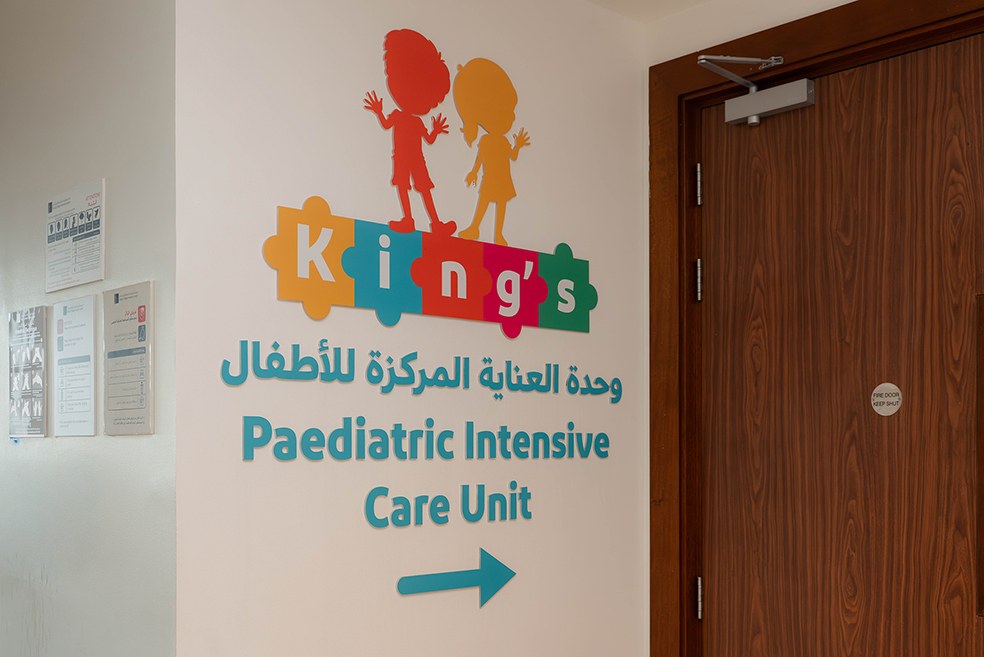
This is where a Pediatric Intensive Care Unit (PICU) becomes critical. King’s College Hospital London – Dubai is highlighting the importance of access to advanced pediatric intensive care in the UAE, particularly for children with complex conditions who may need to be transferred from another hospital for a higher level of care.
Unlike an adult intensive care unit, a PICU is specifically designed around the needs of babies, children and teenagers. At King’s College Hospital Dubai, critically ill children are cared for by a dedicated pediatric intensive care team round the clock, with access to advanced respiratory, neurological, cardiovascular and renal support, with supervision of pediatric superspecialists.
“Children can deteriorate very quickly, so having the right expertise available at the right time is extremely important,” said Dr. Vishnuvardhan Meedimale, Senior Consultant, Pediatric Intensive Care Unit at King’s College Hospital Dubai. “Our role is not only to care for children who arrive through our own Emergency Department. We also work closely with physicians at other hospitals when they have a child who requires specialist intensive care, advanced organ support or expertise that may not be available in their unit.”
Caring for Some of the Most Critically Ill Children
The PICU at King’s College Hospital Dubai operates alongside a dedicated High Dependency Unit (HDU), allowing children to receive different levels of monitoring and support according to how unwell they are. The unit manages a wide range of medical and surgical emergencies, including severe respiratory failure, bronchiolitis and asthma, septic shock, diabetic ketoacidosis, acute kidney injury, status epilepticus etc. It also provides critical care before and after major pediatric surgical procedures, as well as post-pediatric liver transplant care.
For children who are unable to breathe adequately on their own, the team can provide high-flow oxygen, non-invasive ventilation, and invasive mechanical ventilation, as well as inhaled nitric oxide therapy when required.
Advanced kidney support is also available within the PICU, including Continuous Renal Replacement Therapy (CRRT), Sustained Low-Efficiency Dialysis (SLED), intermittent hemodialysis, and acute peritoneal dialysis. For neurological emergencies, the team can provide advanced neurological monitoring and management
A Particularly Important Role in Complex Liver Care
One of the PICU’s specialized areas is caring for children with serious liver disease. King’s College Hospital Dubai is a recognized Centre of Excellence for pediatric liver care, with the PICU supporting children with acute liver failure as well as those requiring intensive care around the time of liver transplantation. In fact, King’s College Hospital Dubai is the only PICU catering to liver transplant services.
The model brings pediatric intensivists together with hepatologists, transplant surgeons, anesthetists, specialist nurses and other pediatric subspecialists so that complex cases can be managed by one multidisciplinary team.
“Some of the children referred to us are extremely unwell and require several specialties to be involved at the same time,” said Dr. Vishnu. “The advantage of having these services within the same hospital is that we can bring the right people to the bedside quickly. For a critically ill child, that coordination matters.”
Supporting Referring Hospitals and Physicians
For physicians caring for a deteriorating child, recognizing when a higher level of pediatric critical care is required can be an important part of treatment. King’s PICU works with referring physicians and hospitals to assess complex cases, support stabilization and coordinate transfer when advanced intensive care is needed.
The hospital has pediatric subspecialty support across areas including neurology, hepatology, pulmonology, cardiology, immunology, and orthopedics, allowing the PICU team to involve additional expertise depending on the child’s condition.
This multidisciplinary model is particularly important for children whose illness affects more than one organ system or who require advanced respiratory, cardiovascular, renal, or neurological support etc. Importantly, referral does not mean that the child’s primary physician is not involved in the ongoing care. Communication and collaboration with referring doctors form part of the PICU model, helping maintain continuity during treatment and when the child is ready to transition back to the referring unit.
Emphasis on Empathetic Care
Admission to a PICU can be an overwhelming experience for families. Alongside treating the immediate medical problem, the team at King’s focuses on keeping parents regularly updated about what is happening and what comes next. Each child’s progress is reviewed regularly, with treatment adjusted as their condition changes. As they improve, children may move from intensive care to the HDU or pediatric ward before eventually returning home.
“PICU care is about getting a child through the most critical stage of their illness safely,” Dr. Vishnu added. “But recovery does not end when they leave intensive care. We work with families and the wider pediatric team to make sure there is a clear plan for the next stage of their care.”
The Pediatric Intensive Care Unit at King’s College Hospital Dubai is consultant-led and supported by pediatric intensive care specialists, critical care nurses and a wider multidisciplinary pediatric team 24/7. For physician referrals and PICU transfers, King’s College Hospital Dubai’s pediatric intensive care team can be contacted directly to discuss a patient, assess the level of care required and coordinate transfer where appropriate.
About King’s College Hospital London – Dubai
King’s College Hospital London – Dubai is part of King’s College Hospital London, a world-renowned teaching hospital with more than 180 years of clinical excellence. Established in the UAE in 2017, King’s delivers British standards of preventive, multidisciplinary, and evidence-based care through a 100-bed multi-specialty hospital at Dubai Hills Estate, advanced medical centers across Dubai, and dedicated specialty clinics. The long-standing relationship between King’s and the UAE dates to 1979, when a donation from His Highness Sheikh Zayed Bin Sultan Al Nahyan supported the creation of the King’s Liver Research Centre in London, now one of the world’s leading liver centers. Today, King’s College Hospital Dubai is home to Dubai’s only liver transplant centre and has established Centers of Excellence in Breast Treatment, Endoscopy, Orthopedics, Surgical Proctology, and Spine Surgery.
King’s College Hospital London – Dubai offers a comprehensive range of services from primary care to complex tertiary treatment, supported by largely UK-trained consultants working within an integrated, multidisciplinary care model. For more information, visit kingscollegehospitaldubai.com.