 The Gulf Time Newspaper One of the finest business newspapers in the UAE brought to you by our professional writers and editors.
DUBAI/WAM
The UAE’s non-oil foreign trade reached AED 2.945 trillion in the first nine months of 2026, up 10.1% on the same period last year and approaching the AED 3 trillion mark for the first time. Growth was driven by record non-oil exports of AED 706 billion, up 21.6%, and imports of AED 1.661 trillion, up 11.5%, while re exports totalled AED 578 billion.
The share of non-oil exports in total non-oil foreign trade rose to 24.0%, from 21.7% a year earlier, after monthly exports surpassed AED 100 billion for the first time in September 2026.
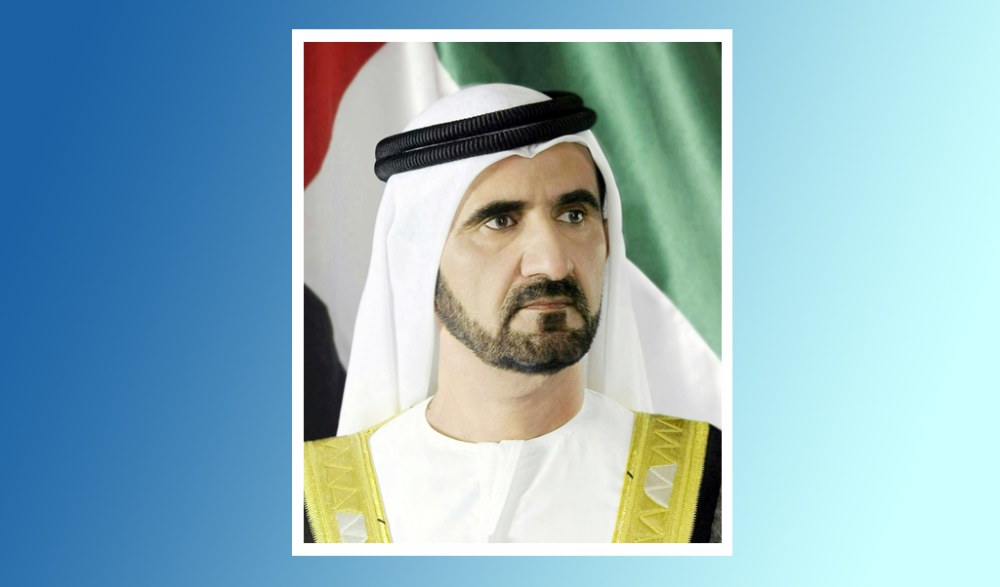
His Highness Sheikh Mohammed bin Rashid Al Maktoum, Vice President, Prime Minister and Ruler of Dubai, said: “Today, I reviewed the UAE’s foreign trade report for the first nine months of 2026. For the first time, our non-oil foreign trade is nearing AED 3 trillion in just nine months, up 10% on last year, while our exports to our top ten trading partners grew by 31%.”
His Highness added: “In a year of economic and political challenges and shifting global trade flows, the UAE remains a central hub for international trade. It continues to adapt to every change around it with agility and efficiency, strengthen its network of relationships, expand its export markets and chart its own distinctive path of rapid, sustainable economic growth. On this achievement, we congratulate the President, all our national teams and our partners who believed in our success.”
These results confirm the steady upward trajectory of the UAE’s non-oil foreign trade, which grew 37.2% compared with the first nine months of 2024 and 55.2% compared with the same period of 2023, when it stood at AED 1.9 trillion. In 2019, the figure for the same period did not exceed AED 1.3 trillion. This rise reflects the success of the UAE’s strategy to build a broad network of trade and economic partnerships and to deepen its openness to global markets.
Dr. Thani bin Ahmed Al Zeyoudi, Minister of Foreign Trade, said the historic AED 2.945 trillion achieved in the first nine months of the year reflects the sustained momentum of the UAE’s trade and its success in consolidating its position as a pivotal hub for global trade. Delivered despite challenges and shifts in the international economic and trade environment, this performance, Al Zeyoudi noted, underscores the foresight of the UAE leadership and the effectiveness of the country’s trade policies.
The achievement, Al Zeyoudi added, demonstrates the capacity of the UAE’s trade ecosystem to keep expanding, accelerate the flow of goods across global markets and respond with agility to the changes affecting international trade. This has been made possible by diversifying partners and markets, developing new trade routes, and strengthening the efficiency and resilience of supply chains.
Record non-oil exports of AED 705.8 billion, up 21.6%, reflect the growing presence of UAE products in global markets, Al Zeyoudi explained. Exports to the UAE’s top ten trading partners rose 31.6%, and monthly exports exceeded AED 100 billion for the first time in September 2026.
Meanwhile, trade with the rest of the world grew 11.9%, outpacing the 8.3% growth recorded with the top ten partners. For Al Zeyoudi, this confirms the widening reach and geographic diversity of the UAE’s trade network, and its growing ability to access new markets and capture global opportunities.
In the third quarter of 2026, Al Zeyoudi noted, non-oil foreign trade reached AED 1.025 trillion, up 7.1% on the third quarter of 2025 and 11.1% on the previous quarter. Trade stood at AED 922.9 billion in the second quarter and AED 997.1 billion in the first.
Quarterly non-oil exports, Al Zeyoudi added, have now exceeded AED 200 billion for five consecutive quarters, from the third quarter of 2025 through the third quarter of 2026. Exports reached AED 256.1 billion in the third quarter of 2026, up 19% year on year and 16.2% on the previous quarter.
Al Zeyoudi said: “Comprehensive Economic Partnership Agreements (CEPAs) play a pivotal role in driving this expansion. They open new markets for UAE exports, ease the movement of goods, lower trade barriers and give national companies wider access to consumers and partners around the world.
These agreements are a cornerstone of the UAE’s strategy to broaden its network of trading partners, boost bilateral trade flows, raise the competitiveness of exports and re-exports, and reinforce the UAE’s position as a leading gateway for global trade. We will continue to develop these partnerships and open new trade routes, ensuring smoother trade flows, a wider international footprint for UAE products and sustained record growth in non-oil foreign trade.”
Non-oil exports grew 73.7% compared with the first nine months of 2024. Switzerland, Hong Kong and India were the leading destinations, with exports to Switzerland up 75.8% and to Hong Kong up 59.1%. Gold, jewellery and tobacco products topped the list of exported goods, while exports of the top ten commodities rose 35.8% year on year.
Non-oil trade with the 23 countries covered by the 19 CEPAs in force as of 20 October 2026 reached approximately AED 510.8 billion. This was up 6.6% on the same period of 2024, 25.5% on 2023 and 52.1% on 2022, nearly double its 2021 level and more than twice its 2019 level.
This trade comprised imports of AED 317.6 billion, re-exports of AED 104.6 billion and non-oil exports of AED 88.5 billion. UAE exports to these countries have grown to nearly two and a half times their 2019 level, up 27% on 2022 and more than 54% on 2021.
Saudi Arabia was the leading destination for re-exports, followed by Iraq and Oman, where re exports grew 71.5% year on year. Telephone sets, diamonds and cars led the list of re-exported goods, underscoring the UAE’s standing as a major hub for re-export and distribution to regional and global markets.
Imports from the top ten trading partners rose 7.9%, while imports from the rest of the world grew 14.6%. China was the largest source of imports, followed by India and the United States, where imports grew 5.3%. Gold, telephone sets and refined petroleum oils topped the list of imported goods, while imports of the top ten commodities rose 22.0%.
Across total trade, gold, telephone sets and jewellery were the most traded goods, with the top ten commodities valued at AED 2.011 trillion, up 22.1% year on year.