 The Gulf Time Newspaper One of the finest business newspapers in the UAE brought to you by our professional writers and editors.
ABU DHABI/WAM
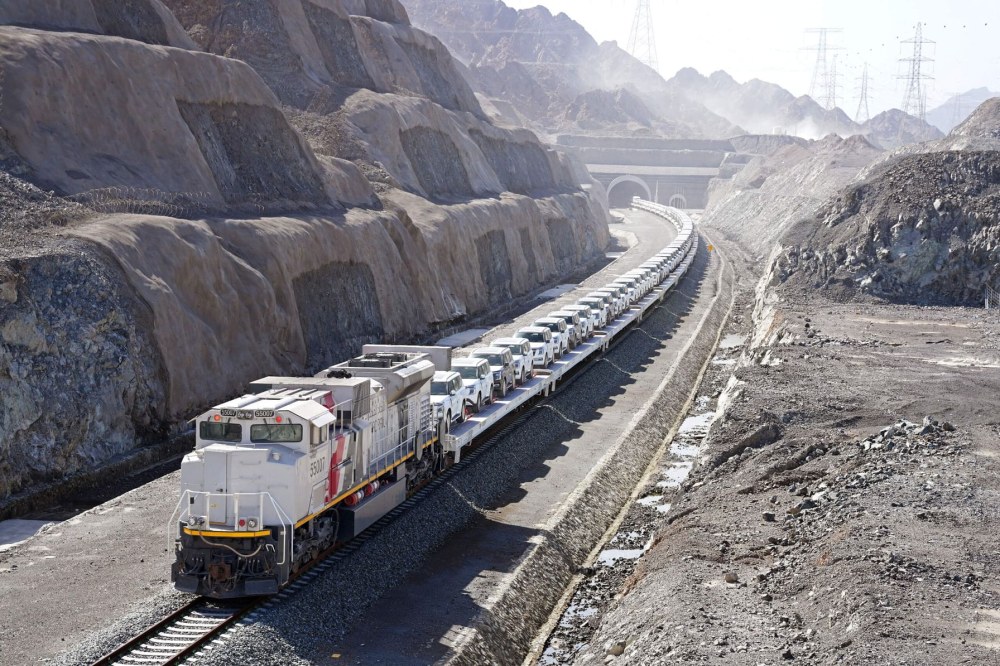
Etihad Rail transported 1.8 million tonnes of sulphur in 2026, alongside more than 4 million tonnes of aggregates and over 129,000 containers, reflecting continued growth and operational efficiency, according to Adhraa Almansoori, Director of Public Policy and Sustainability at Etihad Rail.
Almansoori told Emirates News Agency (WAM), on the sidelines of Make it in the Emirates 2026, that the company has supported sustainability goals by eliminating more than 340,000 truck journeys on roads and reducing carbon emissions by between 70 percent and 80 percent per trip. She noted that rail freight services provide a comprehensive, cost-effective and reliable logistics solution across the UAE.
She added that freight services on the national railway network are directly connected to Khalifa Port, Jebel Ali Port and the Industrial City of Abu Dhabi (ICAD), as well as key logistics hubs through 11 stations, including four major ports. Each freight train can carry the equivalent load of 300 heavy trucks, enhancing efficiency in transporting large volumes of goods in a single journey.
She noted that current clients include ADNOC for sulphur transport, Stevin Rock for aggregates, and Borouge for petrochemicals. Freight trains operate on scheduled timetables and dedicated corridors, ensuring continuity of operations without disruption from traffic congestion or road incidents.
Almansoori confirmed that Etihad Rail Freight, responsible for cargo operations, has recorded consistent growth since the launch of freight services in February 2023, contributing to trade flows and supply chain efficiency in line with the growing needs of the industrial sector.
Regarding passenger services, she said operations will be introduced in gradual, carefully planned phases, with the first phase set to begin in 2026, ensuring the highest standards of safety, reliability and efficiency in line with global best practices.
She explained that the initial phase will connect Abu Dhabi and Dubai, extending to Fujairah on the east coast, noting that route selection was based on criteria including population density, demand levels and connectivity priorities between the emirates.
On the company’s participation in Make it in the Emirates 2026, Al Mansoori said Etihad Rail is taking part for the second consecutive year, reflecting the importance of the event in supporting industrial growth, investment and transformative technologies, as well as boosting economic development in the UAE.
She added that the Etihad Rail network represents an integrated national model aligned with the Make it in the Emirates vision, noting that 70 percent of construction materials used in developing and operating the network were sourced from local companies, while local suppliers account for 97 percent of the company’s total suppliers, underscoring support for national industries and confidence in Emirati capabilities.