 The Gulf Time Newspaper One of the finest business newspapers in the UAE brought to you by our professional writers and editors.
DUBAI / WAM
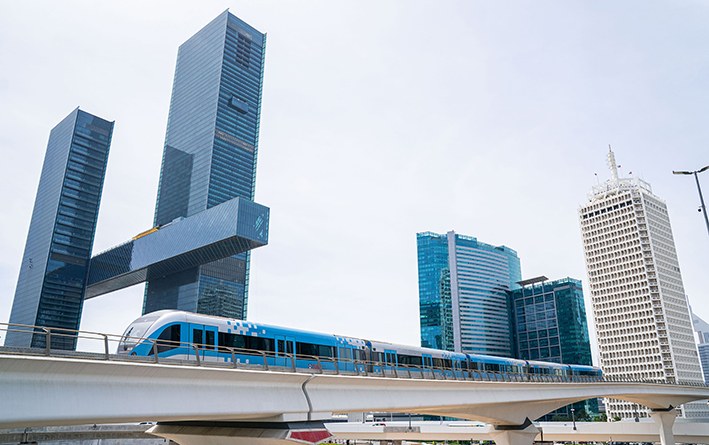
Dubai’s public transport network, shared mobility services and taxis carried around 348.1 million riders during the first half of 2026, with average daily ridership reaching nearly 1.9 million, according to the Roads and Transport Authority (RTA).
The figures cover Dubai Metro, Dubai Tram, public buses, marine transport, taxis and shared mobility services, including app-based vehicles, hourly rentals and bus-on-demand. Limousines separately carried 5.7 million riders during the same period. Mattar Al Tayer, Director-General and Chairman of the Board of Executive Directors of the RTA, said the figures reflect the success of Dubai’s vision to build a world-class integrated transport system based on sustainability and innovation, making public transport the preferred mobility option for residents and visitors.
He said growing public confidence in the transport network has strengthened the culture of sustainable mobility, raising the share of trips made using public transport and shared mobility from 6 percent in 2006 to 22.3 percent in 2025. He added that the figures demonstrate the success of the RTA’s long-term investments and policies aimed at enhancing Dubai’s global competitiveness and quality of life.
Al Tayer said the RTA is implementing a strategic vision that includes major infrastructure expansions, led by the approval of the Dubai Metro Gold Line, a 42-kilometre route with 18 stations at an estimated cost of AED34 billion. The line will become Dubai’s first fully underground metro route and will connect with the Red and Green Metro lines as well as Etihad Rail. The authority is also continuing work on the Dubai Metro Blue Line, a 30-kilometre route with 14 stations serving nine key districts with an estimated population of around one million residents, in line with the Dubai 2040 Urban Master Plan.
He added that the RTA has begun the phased operation of 637 new buses built to Euro 6 low-emission standards, including 40 electric buses, the largest deployment of electric buses in the UAE, supporting Dubai’s target of converting the entire public bus fleet to electric and hydrogen-powered vehicles by 2050.
Looking ahead, Al Tayer said the RTA began operating driverless taxis earlier this year and is preparing to launch commercial air taxi services before the end of 2026, while continuing work on the Dubai Loop project.
Al Tayer said Dubai Metro accounted for the largest share of total ridership during the first half of the year at 39.2 percent, carrying around 136.5 million passengers on the Red and Green lines.
Taxis followed with 25.5 percent (88.9 million riders), while public buses carried 85.1 million passengers, representing 24.4 percent of total ridership. Together, these three modes accounted for around 89 percent of all passenger journeys.
He added that January recorded the highest monthly ridership with 73.4 million passengers, while the remaining months each registered between 49 million and 66 million riders. Shared mobility services carried 25.7 million passengers, marine transport handled 8.1 million riders, and Dubai Tram carried 3.8 million passengers.
Al Tayer said BurJuman was the busiest interchange station with 8.4 million riders, followed by Union with 6.5 million. On the Red Line, Al Rigga ranked first with 6.4 million riders, followed by Mall of the Emirates with 5.2 million and Business Bay with 5 million. On the Green Line, Sharaf DG was the busiest station with 4.9 million riders, followed by Baniyas Square with 3.8 million and Stadium with around 3.7 million. The RTA continues implementing plans to integrate public transport, shared mobility services and first and last-mile solutions with pedestrian, cycling and intelligent traffic networks, aiming to increase the share of journeys made using public transport and shared mobility to 25 percent by 2030, in line with the Dubai 2040 Urban Master Plan and the Dubai Economic Agenda (D33).