 The Gulf Time Newspaper One of the finest business newspapers in the UAE brought to you by our professional writers and editors.
ABU DHABI/ GULF TIME
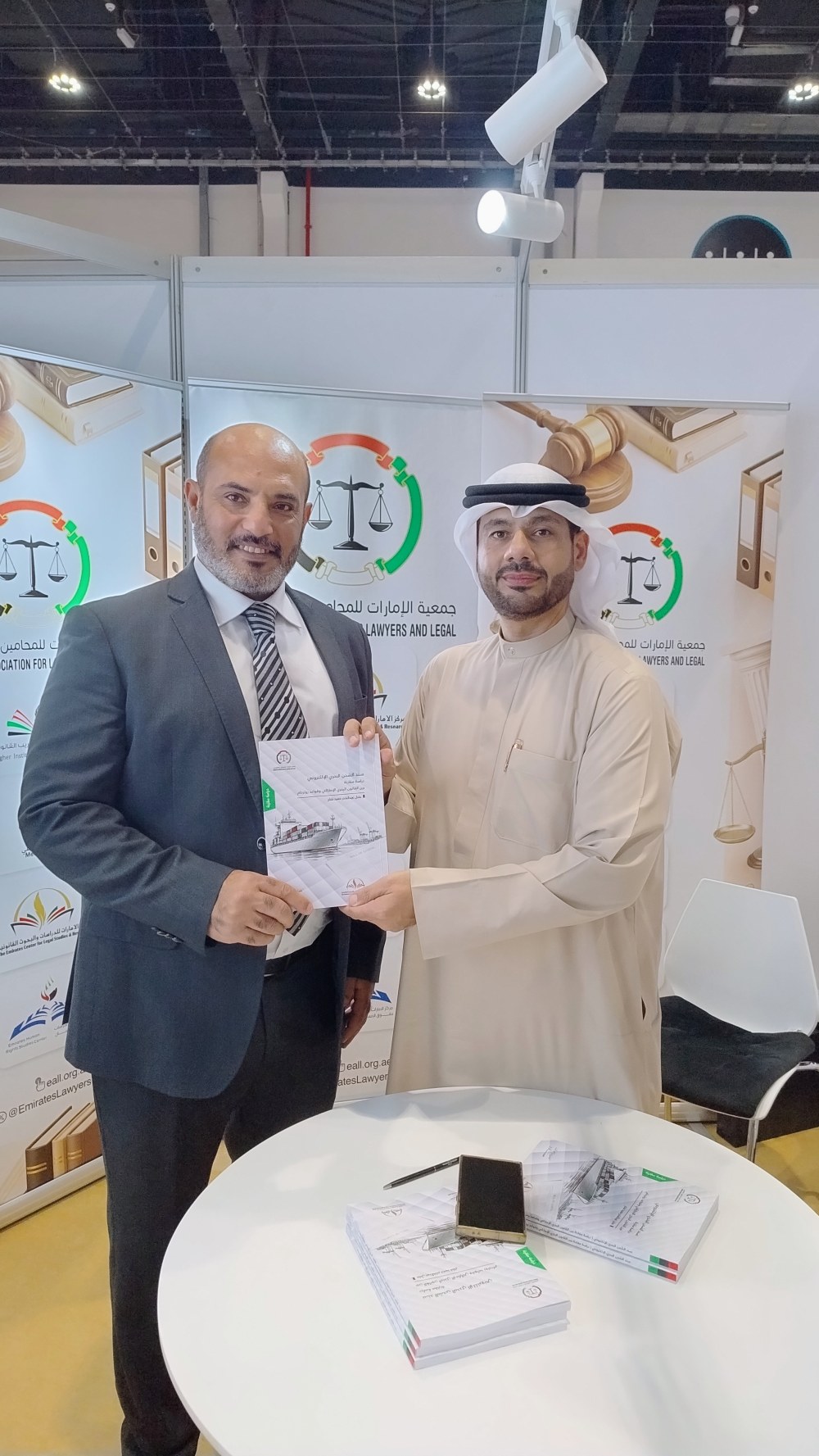
Professor Adil Abdulqader Fakhir, lawyer, head of the Media Center, and board member of the Emirates Association for Lawyers and Legal Consultants, signed his first book entitled “The Electronic Bill of Lading,” during his participation in the Abu Dhabi International Book Fair 2026.
Fakhir emphasized that the Abu Dhabi International Book Fair represents one of the prominent cultural events that brings together readers, writers, and publishing houses from around the world, contributing to the dissemination of knowledge, encouraging reading, and introducing both Emirati and Arab cultures.
He praised the exceptional organization of the exhibition this year and the diversity of its events, noting that it embodies the status that the UAE places on books, science, and culture, and reflects its keenness to enhance the cognitive and cultural movement.
He stated that his participation in the exhibition holds special importance for him, as it witnessed the launch of his first experience in the world of authorship, adding: “The Abu Dhabi International Book Fair will leave a good mark in my soul throughout my life, for from here I launched my first book.”
Regarding the content of the book, Fakhir explained that “The Electronic Bill of Lading” addresses the digital transformation witnessed by international trade, focusing on the regulatory legal framework for the electronic bill of lading in the UAE, and its compatibility with the Rotterdam Rules, which is the international convention adopted by the United Nations in 2008.
He pointed out that the book stems from a fundamental premise that the transition from the paper bill of lading to the electronic bill is no longer a theoretical option, but rather a practical necessity imposed by the requirements of speed and efficiency in international commercial transactions.
He added that the book examines the ability of UAE maritime law, in its current form, to accommodate the electronic bill of lading as an independent legal tool capable of performing the functions performed by the traditional bill, particularly with regard to evidence, representation of goods, and the circulation of rights.
Fakhir stressed that the importance of the book stems from its handling of one of the modern topics in maritime law, in light of the increasing interaction between technology and law, and the resulting challenges facing traditional legal systems in absorbing newly introduced concepts, including “electronic control” as an alternative to physical possession. He pointed out that the book also highlights the extent of readiness of UAE legislation to keep pace with digital transformations in the trade and maritime transport sector by analyzing existing legislative frameworks and their ability to deal with rapid technical developments.
He stated that the book aims to clarify the concept of the electronic bill of lading and its characteristics, state the fundamental differences between it and the traditional bill, in addition to analyzing its legal effects in international trade, and identifying the most prominent challenges associated with it, whether regarding its evidentiary weight or the technical risks accompanying its use.
He added that the book concludes that UAE legislation provides an appropriate general basis for recognizing the electronic bill of lading through its acknowledgement of the evidentiary weight of electronic documents, but the maritime field needs, according to what the book concluded, more specific legislative regulation to enshrine this recognition in an explicit and integrated manner.
Fakhir pointed out that the Rotterdam Rules provide an advanced model that can be guided by in this field, especially regarding the regulation of electronic records and mechanisms for transferring control over them. He stressed that integration between national legislation and modern international legal trends, in addition to benefiting from contractual and technical solutions, represents an important path to enhance the effectiveness of the electronic bill of lading and consolidate its use in the contemporary legal and commercial environment.