 The Gulf Time Newspaper One of the finest business newspapers in the UAE brought to you by our professional writers and editors.
ABU DHABI / WAM
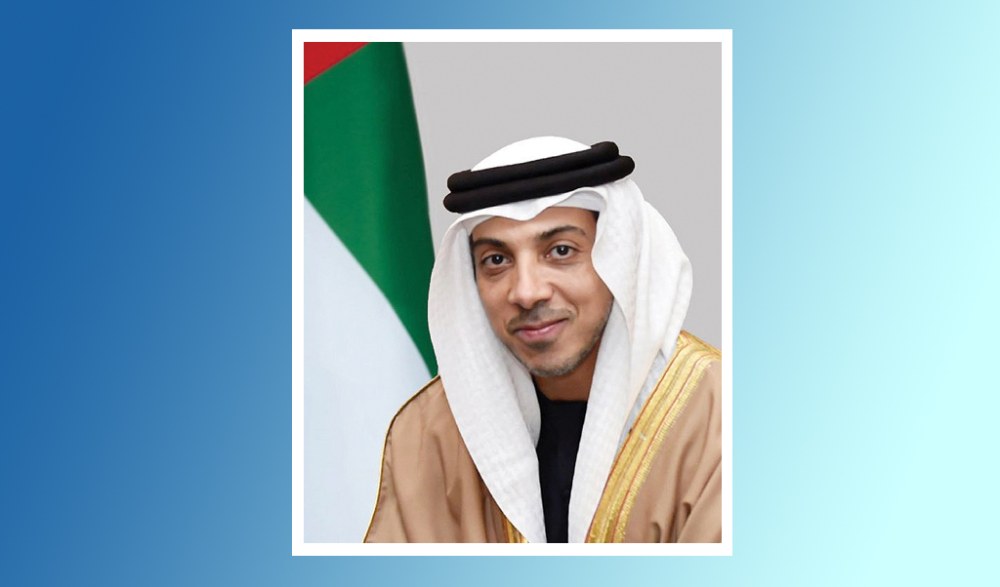
Under the directives of President His Highness Sheikh Mohamed bin Zayed Al Nahyan, His Highness Sheikh Mansour bin Zayed Al Nahyan, Vice President, Deputy Prime Minister and Chairman of the Presidential Court, has issued a resolution establishing the Community-Managed Virtual Authority, affiliated with the Presidential Court. The Authority is inspired by the vision of the Founding Father, the late Sheikh Zayed bin Sultan Al Nahyan, which was centred on empowering people, placing trust in their capabilities, and engaging members of society in assuming responsibility and contributing to nation-building.
His Highness Sheikh Mansour bin Zayed Al Nahyan also issued a resolution appointing HH Sheikh Zayed bin Mohamed bin Zayed Al Nahyan as Chairman of the Community-Managed Virtual Authority. The resolution establishing the Community-Managed Virtual Authority stipulates that it will operate within a flexible and non-traditional governance framework based on community participation and the periodic assignment of executive management responsibilities to skilled and experienced members of society. This will be carried out in accordance with controls and standards approved by the Chairman to ensure efficiency, continuity and the positive impact for which the Authority was established.
The Authority will work in alignment with the UAE’s national priorities and approved strategies while maintaining its innovation- and experimentation-driven operating model. Its primary focus will be on enabling community members to contribute to the development and implementation of solutions and projects that generate sustainable national and societal value.
According to the resolution, the Authority aims to empower members of society to actively contribute to serving the nation through participation in creating innovative solutions and nationally valuable projects that advance development and growth, while establishing a new collaborative operating model based on participatory governance principles to harness community talents and capabilities.
Under the resolution, the Authority is entrusted with developing general policies and strategies to enable community members to participate in creating solutions and launching national projects and programmes by attracting and investing in national talent, including youth, professionals, academics, entrepreneurs and retirees, and leveraging their expertise in service of the nation.
It is also responsible for establishing a sustainable system that facilitates the submission of solutions and proposals related to community participation in development processes, as well as documenting the knowledge and expertise generated through the Authority’s work and ensuring their transfer between successive teams in a manner that preserves institutional memory.
The resolution further stipulates that the Authority shall base its work and practices on a set of principles and foundations that guide its operating model and define its framework.
Foremost among these is the vision of the Founding Father, the late Sheikh Zayed bin Sultan Al Nahyan. The Authority draws inspiration from his approach, rooted in empowering people, trusting in their capabilities and involving members of society in assuming responsibility and contributing to nation-building by entrusting capable individuals with key roles and giving them the space to work and take initiative.
The second principle is participatory governance, whereby the Authority adopts an advanced governance model based on involving members of society in manging governmental work, thereby strengthening integration between the state and society and transforming participation into a sustainable institutional practice.
The third principle is community empowerment, under which the Authority enables skilled and talented members of society to experiment and innovate and to apply their capabilities towards developing practical solutions that serve the nation and address its needs.
The fourth principle is flexibility and experimentation. The Authority adopts flexible working methods that allow for continuous testing and development, free from traditional constraints, thereby enhancing responsiveness and improving the quality of outcomes.
The fifth principle is sustainability and continuity. The Authority is committed to ensuring the continuity of its work and outputs through clear regulatory frameworks and effective mechanisms for transferring knowledge and accumulating expertise across successive cycles.
The sixth principle is national impact. The Authority focuses on developing projects and initiatives with tangible and sustainable impact that contribute to national priorities and enhancing quality of life across society.
The resolution provides that the Chairman of the Authority shall be appointed by a decision of the Chairman of the Presidential Court and shall be responsible for overseeing the Authority’s activities to ensure the achievement of its objectives and alignment with national policies and priorities, approving the Authority’s general policies and strategies, and submitting them to the Chairman of the Presidential Court for endorsement.
The Chairman of the Authority shall also be responsible for approving development and implementation plans for initiatives and programmes and monitoring their execution, as well as issuing internal regulations and systems related to financial and administrative affairs. The Authority’s annual budget and final accounts shall be submitted to the Chairman of the Presidential Court for approval.
The resolution explains that the Authority will adopt a periodic community-managed model in conducting its operations through a community team consisting of a Director-General and supporting teams drawn from society to participate in managing the Authority during specified operational cycles.
The Director-General will be selected from among skilled and qualified community members for each cycle and will assume executive responsibility for contributing to the management of the Authority’s work and achieving its objectives during a specified term, which may be extended or shortened by a decision of the Chairman in accordance with operational requirements. This model aims to promote the rotation of roles, the exchange of expertise and the participation of the broadest possible segment of society in the Authority’s management and the achievement of its objectives.
The UAE is pioneering the introduction of this innovative model for engaging community members, in line with the vision of His Highness the President to develop and empower people and invest in their talents and capabilities in service of the community and the country.
The new Authority seeks to present a leading global model in participatory governance based on human-centred development and community empowerment. Its model has also been designed in line with the UAE Centennial 2071, which calls for creating an environment that enables members of society to unlock their capabilities and skills, while encouraging the development of new government administrative models and systems that foster experimentation, innovation and initiative in support of national development.
It also supports the objective of positioning the UAE as a global reference in shaping the governments of the future and a laboratory for creating and testing new operating models that serve UAE society and strengthen engagement with its people.