 The Gulf Time Newspaper One of the finest business newspapers in the UAE brought to you by our professional writers and editors.
DUBAI / WAM
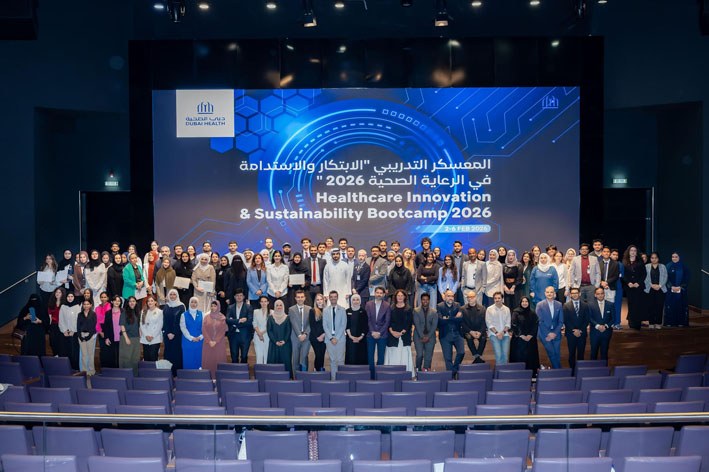
Dubai Health and Queensland University of Technology (QUT), in collaboration with Siemens Healthineers and ArmHub, have concluded “Healthcare Innovation and Sustainability Week”, bringing together healthcare professionals, academics, students, and industry leaders from Brisbane and Dubai, to advance sustainability in academic health systems.
Over two weeks, participants explored how technology-enabled care models, digital health, design thinking, and sustainability principles can be embedded into clinical practice.
The first week in Brisbane immersed Dubai Health professionals in Australia’s academic healthcare ecosystem through symposium sessions and site visits to leading innovation facilities, including the Translational Research Institute (TRI), the Wesley Hospital, and the Gold Coast Health and Knowledge Precinct.
As the industry partner for the Australia component, the ARM Hub demonstrated how robotics, automation, AI, and advanced manufacturing capabilities can support more sustainable healthcare delivery models.
The second week in Dubai shifted focus to collaborative solution development through two parallel streams. As programme co-designers, Siemens Healthineers co-led the workshops, contributing specialist expertise in healthcare technology and sustainability, leveraging both local and global expertise.
The co-designed programme between Dubai Health and Siemens Healthineers guided teams through hands-on prototyping and refinement, ensuring that ideas were grounded in practical, scalable applications.
Professor Cori Stewart, Founder and CEO of the Advanced Robotics for Manufacturing (ARM) Hub, Queensland University of Technology, said, “With Dubai Health, we shared how we’re getting science out of the lab and into hospitals—using robotics, automation and AI to improve care and reduce bed pressure. Brisbane company “Microbio” was a great example showcased: by integrating data and AI, they’ve cut sepsis detection time from 24 hours to just 3.”
Healthcare professionals worked on advancing sustainable approaches within academic health systems using design-led methodologies. Simultaneously, students from four UAE universities, Rochester Institute of Technology Dubai, Dubai Institute of Design and Innovation, American University of Sharjah, and Mohammed Bin Rashid University of Medicine and Health Sciences, the learning and discovery arm of Dubai Health, took part in the Design4Change Bootcamp to develop sustainable, patient-centred solutions.
Dr. Yacine Hadjiat, Director of the Centre for Innovation and Technology at Dubai Health, said, “This programme demonstrates the value of international academic health system collaboration in creating a pipeline of sustainably focused solutions that strengthen care quality and deliver meaningful impact for patients and their families.”
Eng. Razan Daoud, Enterprise Services Europe, Middle East and Africa, Business Development Manager at Siemens Healthineers, said that this bootcamp is a powerful example of what becomes possible when an Integrated Academic Health System, a leading university, and industry come together to co-create.