 The Gulf Time Newspaper One of the finest business newspapers in the UAE brought to you by our professional writers and editors.
CAIRO/WAM
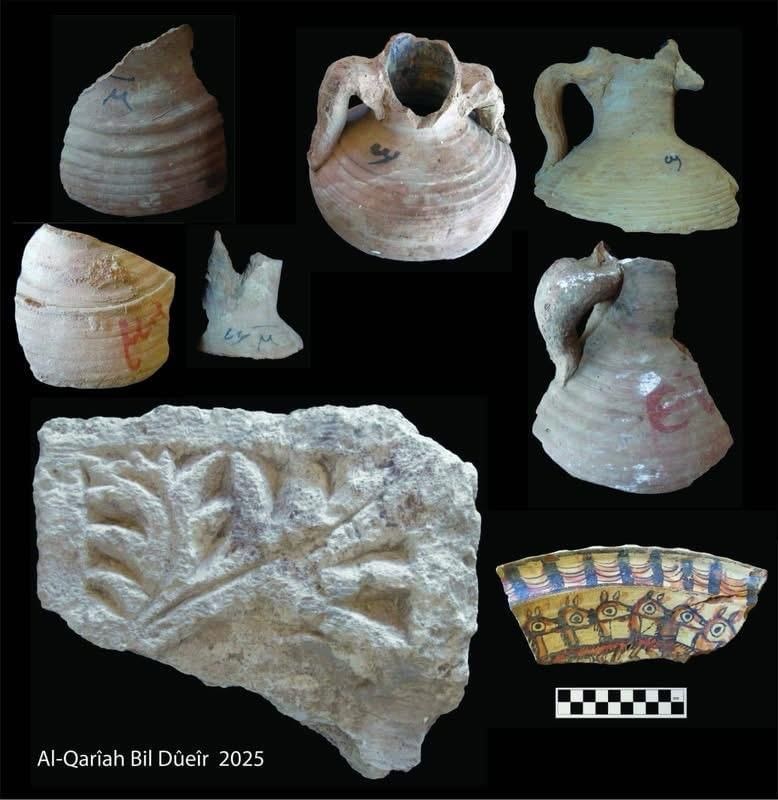
An Egyptian archaeological mission from the Supreme Council of Antiquities (SCA) has uncovered the remains of a fully integrated monastic residential complex dating to the Byzantine period at the site of Al-Qarya bi-Al-Duweir in the Tema district of Sohag governorate, shedding new light on early Christian monastic life in Upper Egypt.
Ahram Online reported that the discovery was made during ongoing excavations at the site, where archaeologists revealed the foundations of several mudbrick buildings that once formed a cohesive monastic community. The find adds an important chapter to Egypt’s long and diverse religious and cultural history.
Egypt’s Minister of Tourism and Antiquities Sherif Fathy described the discovery as a clear reflection of the richness and diversity of Egypt’s heritage across different historical eras.
He said such finds play a key role in supporting efforts to develop cultural tourism and draw attention to lesser-known archaeological destinations, helping to attract both visitors and researchers interested in the history of civilisations and religions.
Mohamed Ismail Khaled, Secretary-General of the SCA, highlighted the scientific importance of the discovery, saying it provides valuable new insights into the nature of monastic life in Upper Egypt during the Byzantine era.