 The Gulf Time Newspaper One of the finest business newspapers in the UAE brought to you by our professional writers and editors.
By Amit Deshmukh
NEW DELHI / GULF TIME
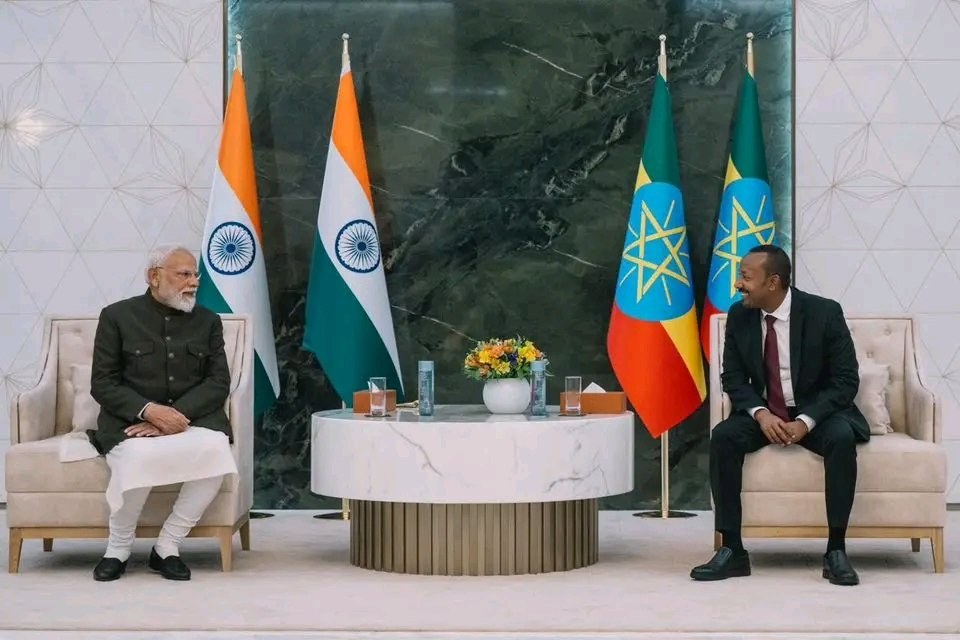
Prime Minister Narendra Modi’s visit to Ethiopia is far more than a routine diplomatic engagement. It marks a defining moment in India–Africa relations, reflecting New Delhi’s evolving foreign policy vision that places Africa at its strategic core. At a time when the global order is in flux and new partnerships are reshaping international politics, this visit underlines India’s confidence in Africa’s rise and Ethiopia’s central role within it.
For India, Ethiopia is not just another African nation—it is the geopolitical gateway to the Horn of Africa. The region is critical for maritime connectivity, global trade routes, and regional stability. Despite political and economic challenges, Ethiopia remains one of Africa’s most promising countries with long-term strategic importance. Prime Minister Modi’s visit signals India’s faith in Ethiopia’s future and its role in a multipolar world order.
Strategic Dialogue in Addis Ababa
The discussions between Prime Minister Modi and the Ethiopian leadership were wide-ranging and forward-looking. Strategic cooperation featured prominently, including security collaboration, maritime awareness in the Red Sea–Indian Ocean corridor, counter-terrorism, and peace-building initiatives. India recognizes Ethiopia’s pivotal role in the African Union and views it as a key partner in addressing regional challenges.
India also reiterated strong support for Ethiopia’s peace and reconciliation processes, reaffirming its long-standing belief in African-led and African-owned solutions without external conditionalities.
Development Cooperation: People at the Core
India’s development partnership with Ethiopia is distinctly people-centric. Unlike extractive or debt-driven approaches, India focuses on capacity-building through skill development, digital education, agricultural modernization, healthcare, and institutional strengthening.
Prime Minister Modi highlighted India’s lines of credit and grant-based projects that have supported sectors such as sugar manufacturing, textiles, rural electrification, and railways. India’s digital public infrastructure offers Ethiopia a scalable model for inclusive and transparent digital governance.
Healthcare, Medical Tourism and Medicine Exports
Healthcare emerged as a key pillar of cooperation. India’s pharmaceutical sector positions it as a trusted supplier of affordable, high-quality generic medicines, vaccines, and medical equipment to Ethiopia and the wider African region.
Medical tourism presents another strong avenue. India’s advanced healthcare facilities, skilled professionals, and cost-effective treatments make it an attractive destination for Ethiopian patients. Hospital partnerships, medical education cooperation, telemedicine, and training of healthcare professionals were highlighted as long-term investments in Ethiopia’s health ecosystem.
Renewed Momentum in Economic Engagement
Ethiopia’s industrial parks, logistics corridors, and growing manufacturing base align closely with India’s strengths in manufacturing and services. The visit encouraged Indian investment in pharmaceuticals, IT services, textiles, agro-processing, healthcare, mining, and renewable energy.
Both sides renewed dialogue on trade facilitation, ease of doing business, and private-sector participation. The emphasis remained on sustainable, mutually beneficial investments that directly improve livelihoods.
Maritime Cooperation and Seafarer Engagement
Given Ethiopia’s strategic location in the Horn of Africa, maritime cooperation is emerging as an important area. India’s expertise in maritime training, port services, and seafarer development offers opportunities for collaboration in sailor training, maritime safety, logistics, and port management—supporting Ethiopia’s regional trade ambitions.
Indian Diaspora: A Living Bridge
The Indian community in Ethiopia is among the oldest Indian diasporas in Africa. Over generations, Indian teachers, traders, and professionals have contributed significantly to Ethiopian society. Prime Minister Modi described them as ambassadors of Indian values, acknowledging their role in strengthening bilateral trust and goodwill.
Cultural and Civilizational Bonds
India and Ethiopia share ancient civilizational links rooted in maritime trade and cultural exchange. The visit revitalized cooperation in education, heritage conservation, and youth engagement. Yoga, Ayurveda, Indian cinema, and cultural initiatives continue to deepen people-to-people ties.
A Partnership for the Future
This visit was not merely symbolic; it laid out a roadmap for future cooperation in climate adaptation, fintech, start-ups, healthcare innovation, skill development, clean energy, maritime collaboration, and regional peace.
In an era of global uncertainty, India and Ethiopia have chosen a partnership grounded in trust, equality, and inclusive development. Prime Minister Modi’s visit marks the beginning of a new chapter—one that now calls for collective action from policymakers, businesses, institutions, and citizens to translate vision into reality.
About the Author: Amit Deshmukh is a former journalist and research scholar with over 15 years of media experience. Director MMJP Global he works on media law and digital diplomacy and has conducted extensive research on Indian lifestyle, yoga, and Ayurveda.