 The Gulf Time Newspaper One of the finest business newspapers in the UAE brought to you by our professional writers and editors.
GULF TIME
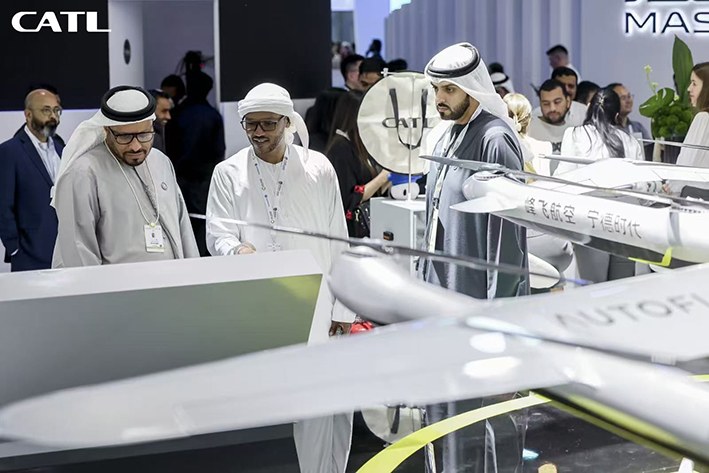
CATL presented its latest energy storage solutions at the 2026 World Future Energy Summit (WFES), highlighting practical applications across grid infrastructure, transport and industrial operations as the Middle East accelerates its clean energy transition.
The company’s participation comes as governments and utilities across the region expand renewable energy capacity and invest in grid modernisation. While solar and other renewables are being deployed at scale, energy storage is increasingly recognised as a critical component for managing intermittency, stabilising power systems and supporting growing electricity demand.
As renewable capacity expands, CATL representatives explained that energy storage systems help manage fluctuations in supply and demand, support peak load management and improve overall energy efficiency. Storage solutions are playing a growing role in ensuring that renewable power can be used reliably and effectively.
“Energy storage enables renewable energy to be used more efficiently while supporting grid stability,” said Kui Weng, CATL ESS Middle East CEO. “As demand grows, operators need solutions that help manage variability and ensure reliable system performance.”
At WFES 2026, CATL showcased its Tener Stack energy storage solution, which has been designed for large-scale deployment and long-term operation. The company noted that such solutions are particularly relevant for high-demand environments, including urban centres, industrial zones and large renewable projects where space, logistics and efficiency are critical considerations.
Beyond traditional grid applications, CATL highlighted the role of energy storage in transport-related infrastructure. Ports, logistics hubs and commercial facilities are increasingly adopting electric equipment and charging systems, placing new demands on power supply. Energy storage can help smooth power demand, reduce reliance on diesel generators and support more stable operations.
According to CATL, integrating energy storage into these environments not only improves operational efficiency but also contributes to emissions reduction and lower operating costs. Storage systems allow facilities to manage energy use more flexibly while supporting electrification initiatives.
The company also discussed the role of energy storage in electric vehicle charging infrastructure. As charging networks expand across the region—particularly for commercial fleets—charging stations require reliable and predictable power supply. Energy storage can help manage peak loads and ensure consistent charging performance without placing excessive strain on local grids. “Charging infrastructure must deliver reliability as usage increases,” Weng said. “Energy storage helps balance demand and maintain service quality, especially for high-power charging applications.”
CATL noted that the Middle East is emerging as a key growth market for energy storage deployment, driven by ambitious renewable energy targets and rising electricity demand. Events such as WFES provide a platform to engage with industry stakeholders and explore collaboration opportunities.
The company concluded that continued deployment of energy storage solutions will be essential to supporting renewable integration, electrification and long-term energy resilience across the Middle East.