 The Gulf Time Newspaper One of the finest business newspapers in the UAE brought to you by our professional writers and editors.
ABU DHABI / WAM
Under the patronage of HH Sheikh Hazza bin Zayed Al Nahyan, Ruler’s Representative in Al Ain Region, the Abu Dhabi Heritage Authority is organising the Al Ain Heritage Festival from 31st January to 9th February at the ADNEC Centre Al Ain, under the theme “Tales from Our Heritage”.
Sheikh Hazza bin Zayed Al Nahyan said that organising the festival comes in line with the directives of President His Highness Sheikh Mohamed bin Zayed Al Nahyan, to ensure that Emirati heritage and its preservation remain national priorities, given its great cultural value, as it connects children, adolescents, and youth with their rich past.
It also supports farmers and handicraft practitioners to uphold their heritage, develop it, and pass it on to future generations.
The festival also underscores Al Ain Region’s status as a cradle of Emirati heritage and a cultural and tourism destination that attracts visitors from within the UAE and abroad through high-quality events reflecting its deep historical and civilisational roots.
In addition, the festival supports artisans, productive families, and small business owners by providing platforms to showcase their products, thereby contributing to the sustainability of traditional crafts and their development into an economic resource. The festival features various heritage events and programmes, including the Date Festival, which highlights the significance of the date palm in Emirati and global heritage.
It offers visitors a comprehensive experience that blends knowledge, tasting, and cultural exchange through several interactive sections, such as the Date Market, which hosts 50 outlets.
Additionally, the festival showcases eight date competitions for various varieties, including Elite Al Ain, Khalas, Shishi, Zamli, Boumaan, Dabbas, Fard, and Wahat.
The Al Ain Heritage Festival also highlights the rich cultural diversity and shared heritage of the Arab region by providing a platform for Gulf and Arab countries to present their heritage, traditional arts, cuisine, and handicrafts. This reflects the richness and complementarity of Arab cultural heritage and identities, with extensive participation through pavilions representing the GCC states and several Arab nations.
The festival recreates the essence of the old Emirati Freej (neighbourhood) through an integrated heritage village designed in an architectural style that replicates the traditional homes, markets, and public squares of Al Ain.
This allows visitors to experience the details of daily life as it once was and to connect with the social values that shaped the identity of the local community.
As part of its programme, the festival presents the Visual Journey through History, guiding visitors along a chronological timeline beginning with the early desert environment, passing through traditional markets and scenes of social celebration, and culminating in the stages of transformation and modern development. The experience is delivered through interactive light and sound experiences that engage the senses.
The festival also includes a selection of distinctive activities, such as the Honey Village, which highlights the heritage of beekeeping and the various local and Gulf honey varieties, alongside tasting experiences and educational workshops.
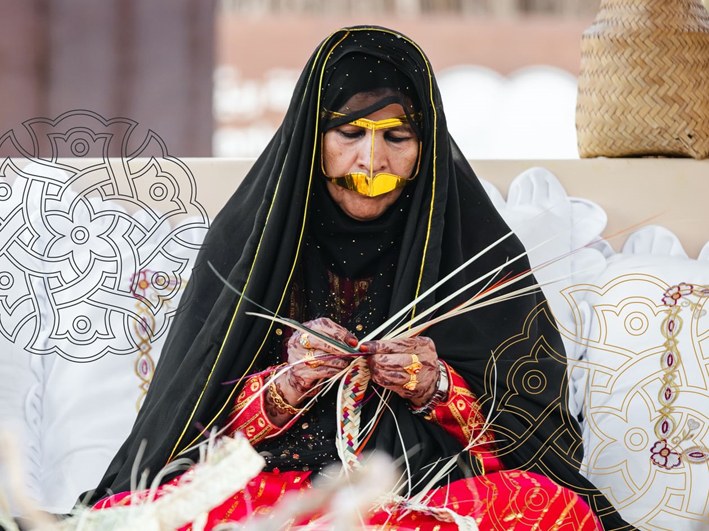
In addition, handicrafts and traditional arts are presented to shed light on inherited crafts such as Sadu weaving, palm frond weaving, Talli embroidery, Dallah making, and traditional jewellery. These activities offer opportunities for direct interaction between artisans and visitors, supporting the transmission of heritage knowledge.
The Outdoor Performance Arena represents a central attraction within the festival, hosting a range of events in an open-air setting that celebrates authentic Emirati heritage. The arena presents traditional performances, including falconry displays that reflect one of the UAE’s oldest cultural practices associated with hunting and the desert environment, alongside Arabian Saluki shows that highlight the breed’s historical significance as a close companion in Bedouin life.
Traditional cooking activities showcase Emirati and Gulf cuisine through live cooking demonstrations and daily competitions, where traditional dishes are presented alongside narratives that recount their cultural origins. This creates an experience that combines tasting with cultural knowledge.
The festival’s main stage hosts a diverse daily programme that includes traditional folk performances, artistic and poetry evenings, theatrical productions, and heritage cinema screenings, offering an open platform for artistic expression inspired by Emirati and Arab heritage.
The festival also offers interactive and educational programmes tailored for children and families, such as the Heritage Visitor Passport, virtual reality experiences, and hands-on activities, contributing to the transmission of heritage to younger generations through a contemporary and engaging approach.