 The Gulf Time Newspaper One of the finest business newspapers in the UAE brought to you by our professional writers and editors.
ABU DHABI/WAM
Mohamed Khalifa Al Mubarak, Chairman of the Department of Culture and Tourism – Abu Dhabi (DCT Abu Dhabi), said that the Natural History Museum Abu Dhabi will serve as a global platform for scientific discovery and a bridge between the planet’s ancient past and its sustainable future.
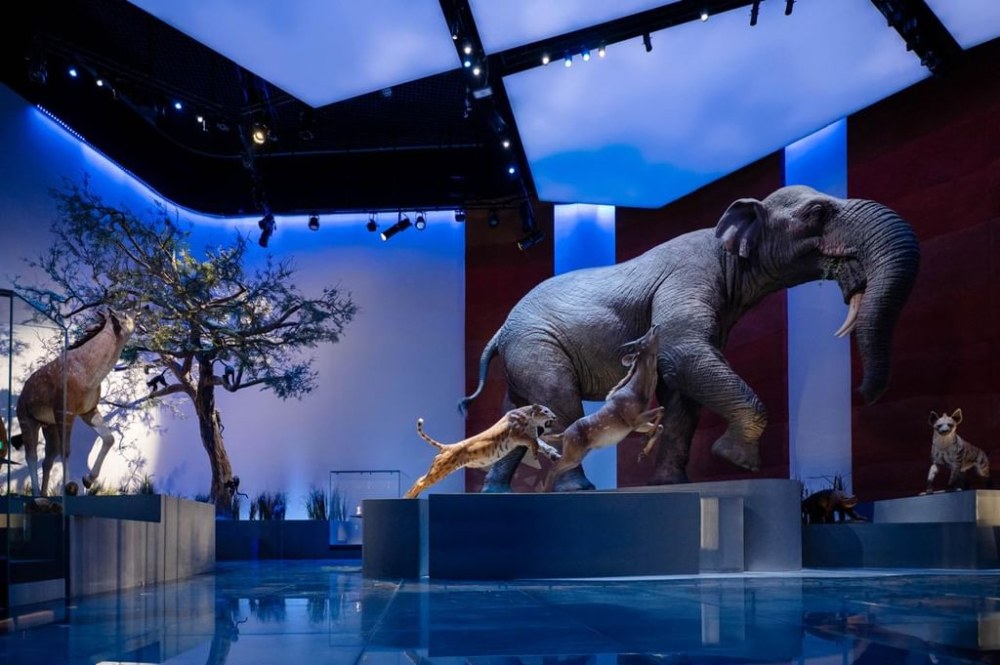
Spanning 35,000 square metres in the Saadiyat Cultural District, the museum is the largest of its kind in the region.
In statements to the Emirates News Agency (WAM), Al Mubarak said that the museum integrates into a cultural ecosystem that includes the Louvre Abu Dhabi and the Zayed National Museum, alongside the upcoming Guggenheim Abu Dhabi and the immersive TeamLab Phenomena Abu Dhabi.
Among the highlights of the museum are three travellers from deep time. One is the famed specimen affectionately known as Stan, a nearly complete skeleton of a mighty Tyrannosaurus rex, an apex predator that ruled the Earth 67 million years ago. It is joined by the largest animal ever known, represented by a magnificent, 25-metre female blue whale specimen, offering extraordinary insight into evolution, marine biodiversity, and the planet’s ongoing story of life.
Completing the trio is the Murchison Meteorite – an artefact that witnessed the formation of our planet and contains 7-billion-year-old grains formed even before our Solar System.
Al Mubarak highlighted that these exhibits are intended to deepen public understanding of biodiversity and evolution.
Beyond its role as a tourist destination, the museum is designed as a scientific research hub. It houses specialised laboratories and educational facilities for earth sciences, paleontology, and marine biology. It also hosts international scientists and collaborates with leading universities, allowing local students to engage in advanced molecular research and conservation studies.